
By Archstone Dental & Orthodontics | October 23, 2026
Recovering from oral surgery requires proper care, patience, and the right nutrition. Whether you have undergone a tooth extraction, dental implant placement, wisdom tooth removal, or another oral procedure, choosing suitable foods can help make recovery more comfortable. A soft food diet after oral surgery reduces pressure on sensitive tissues and helps you get the nutrients your body needs while healing.
During the initial recovery period, your mouth may feel sore, swollen, or tender. Chewing hard foods can irritate the surgical area, while very hot foods may increase discomfort. Soft, nutritious meals are generally easier to eat and allow you to maintain a balanced diet without putting unnecessary stress on the healing tissues.
Why Is a Soft Food Diet Important After Oral Surgery?
After oral surgery, the gums and surrounding tissues need time to heal. Depending on the procedure, your dentist may recommend a soft food diet for several days or longer. Eating foods that require minimal chewing can help protect the surgical site and reduce discomfort during meals.
A suitable diet also provides essential nutrients, including protein, vitamins, and minerals, that support the body’s natural healing process. Staying hydrated is equally important, especially when soreness makes eating and drinking more difficult.
Following your dentist’s dietary instructions is essential because recovery needs vary depending on the type of surgery, the location of the treatment, and your overall health.
Best Soft Foods to Eat After Oral Surgery
Choosing foods that are soft, nutritious, and easy to swallow can make recovery easier. Consider the following options, depending on your comfort level and your dentist’s recommendations.
1. Mashed Potatoes
Mashed potatoes are a convenient source of carbohydrates and provide energy during recovery. Prepare them until smooth and moist, without hard pieces or crispy toppings. Allow them to cool to a lukewarm temperature before eating.
2. Yogurt
Plain, smooth yogurt provides protein and calcium without requiring chewing. Choose varieties without granola, seeds, or crunchy toppings. Greek yogurt can be a particularly useful option because it generally contains more protein than regular yogurt.
3. Scrambled Eggs
Soft scrambled eggs are easy to chew and provide protein, which supports tissue repair. Cook them until fully set but still moist. Avoid adding crispy bacon, hard vegetables, or other ingredients that could irritate the surgical area.
4. Smooth Soups and Broths
Blended vegetable soups and smooth broths provide fluids and nutrients. Choose options without large vegetable pieces, seeds, or tough meat. Let hot soup cool before eating, as excessive heat may irritate healing tissues.
5. Oatmeal and Soft Porridge
Well-cooked oatmeal and smooth porridge can be filling breakfast options. Prepare them with enough liquid to achieve a soft consistency. Allow them to cool, and avoid adding nuts, seeds, or other hard ingredients that may become trapped near the surgical site.
6. Applesauce and Mashed Bananas
Unsweetened applesauce and ripe mashed bananas are convenient choices when chewing is uncomfortable. They provide energy and are easy to eat with a spoon. If acidic foods cause discomfort, choose milder alternatives until your mouth feels better.
7. Smoothies Without Seeds
Smoothies made with milk or a suitable alternative, yogurt, and ripe bananas can provide calories, protein, and other nutrients. Blend ingredients thoroughly to remove lumps and seeds. Do not use a straw during the initial healing period after an extraction or other procedure unless your dentist specifically says it is safe.
8. Soft Pasta and Well-Cooked Vegetables
Once your dentist allows a wider range of foods, thoroughly cooked pasta, soft rice dishes, and tender vegetables may be suitable. Ensure that everything is moist and easy to chew. Start with small portions and avoid foods that cause pain or put pressure on the surgical area.
Foods to Avoid After Oral Surgery
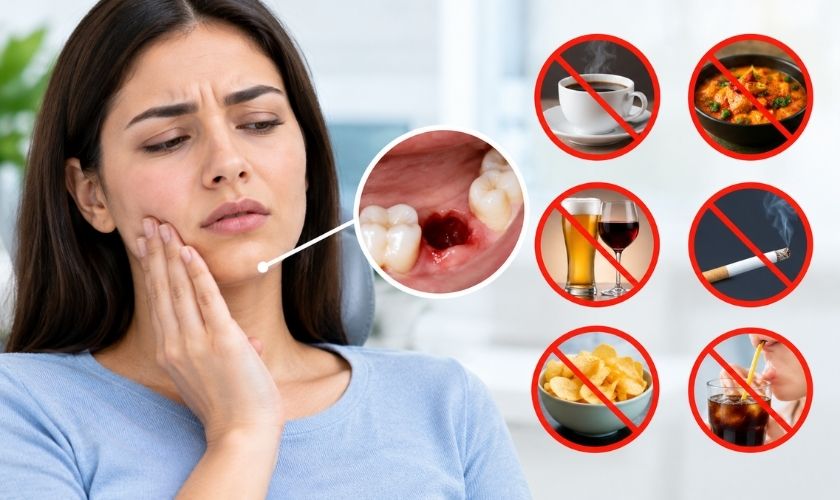
Certain foods may irritate the surgical site, become trapped in the wound, or interfere with healing. Avoid the following until your dentist confirms that you can safely resume eating them.
- Hard and crunchy foods: Chips, crackers, popcorn, nuts, and hard candies can injure sensitive tissues.
- Sticky foods: Chewy sweets, caramel, and similar foods may cling to teeth and gums.
- Spicy foods: Hot peppers and heavily spiced meals may cause burning or irritation.
- Very hot foods and drinks: High temperatures can aggravate discomfort, particularly during the early recovery period.
- Acidic foods: Citrus fruits, vinegar-heavy dressings, and acidic juices may sting sensitive tissues.
- Foods with small particles: Seeds, grains, and crumbly foods may lodge around the surgical site.
- Alcohol: Alcohol may irritate tissues and interfere with certain medications or healing instructions.
- Tobacco products: Smoking and other tobacco use can delay healing and increase the risk of complications.
Avoid chewing directly on the surgical area. If you have had a tooth extraction, do not rinse vigorously, spit forcefully, or use a straw during the period recommended by your dentist, as these actions may disturb the blood clot.
Tips for Eating Comfortably During Recovery
Making a few simple adjustments can help you maintain good nutrition while protecting your mouth.
Eat small, frequent meals. Several smaller meals may be easier to manage than three large meals when your mouth is sore.
Chew slowly and carefully. Use the side of your mouth away from the surgical site when your dentist permits chewing.
Stay hydrated. Drink water regularly in small sips. Avoid using a straw when instructed because suction can disturb the healing site.
Maintain oral hygiene. Follow your dentist’s instructions for brushing, rinsing, and cleaning around the surgical area. Avoid disturbing stitches or the wound.
Gradually reintroduce foods. As tenderness improves, you may be able to add more textures to your meals. Do not rush the transition or return to hard foods before you are ready.
Follow your prescribed care plan. Your dentist may provide specific instructions based on your procedure. These recommendations should take priority over general dietary advice.
How Long Should You Follow a Soft Food Diet?
The length of time you need to follow a soft food diet depends on the procedure and your healing progress. Some people can gradually return to their usual diet within a few days, while others may need soft foods for one to two weeks or longer. More complex procedures, including certain dental implant surgeries, may require additional restrictions.
Pay attention to your symptoms as you recover. Increasing pain, persistent or worsening swelling, fever, pus, or uncontrolled bleeding may indicate a complication. Contact your dental provider promptly if these symptoms occur. Seek urgent care for difficulty breathing or swallowing.
If you have questions about your recovery diet, Archstone Dental & Orthodontics can provide guidance tailored to your procedure and healing needs. Follow-up appointments also allow your dentist to assess the surgical site and determine when it is appropriate to resume your regular diet.
Conclusion
A soft food diet after oral surgery can help you stay nourished while reducing unnecessary pressure on healing tissues. Foods such as mashed potatoes, yogurt, scrambled eggs, smooth soups, and ripe mashed fruits are practical choices during recovery. Avoid hard, crunchy, sticky, spicy, and very hot foods until your dentist confirms that they are safe.
Remember that healing takes time, and dietary restrictions differ from one procedure to another. If you experience unexpected symptoms or have concerns about what you can eat, contact us for guidance from your dental care provider. With appropriate nutrition, careful oral hygiene, and consistent attention to your dentist’s instructions, you can support a smoother recovery.
For personalised post-operative instructions and advice about your recovery, visit our dental office as recommended by your dental care team.
Frequently Asked Questions
- What can I eat immediately after oral surgery?
You can usually start with cool or lukewarm, smooth foods such as yogurt, applesauce, and mashed potatoes once you are allowed to eat. Follow your dentist’s instructions, especially while numbness persists.
- Can I eat rice after oral surgery?
Soft, well-cooked rice may be suitable when your dentist permits it. However, individual grains can become trapped near the surgical site, so smoother foods may be preferable during the earliest stages of healing.
- Is ice cream good after oral surgery?
Plain, smooth ice cream may provide temporary comfort if your dentist permits dairy products. Avoid cones, nuts, chocolate chips, and crunchy toppings, and choose options that do not cause sensitivity.
- When can I eat solid food after tooth extraction?
Many people gradually reintroduce solid foods over several days, but the timing depends on healing and extraction complexity. Avoid hard or crunchy foods until your dentist confirms the surgical site has recovered sufficiently.
- Can I drink coffee after oral surgery?
Lukewarm or cool coffee may be acceptable when your dentist allows it, but avoid hot beverages during early healing. Follow any restrictions related to caffeine, medications, bleeding, or your specific procedure.
- How can I get enough protein on a soft food diet?
Choose smooth yogurt, scrambled eggs, blended lentil soup, soft tofu, or protein-rich smoothies without seeds. These options can help meet your nutritional needs without requiring extensive chewing.
- What symptoms should I watch for after oral surgery?
Seek dental advice for worsening pain, increasing swelling, fever, pus, or persistent bleeding. Difficulty breathing or swallowing requires urgent medical attention, as these symptoms can indicate a serious complication.