
By Archstone Dental & Orthodontics | November 18, 2026
Losing a tooth can affect more than your smile. It may make chewing difficult, change the way nearby teeth fit together, and gradually contribute to jawbone loss. Dental implants offer a reliable way to replace missing teeth while supporting long-term oral function. However, one important question often comes up after an extraction: How long should you wait before getting an implant?
The right timing depends on several factors, including your gum health, jawbone condition, the reason for extraction, and whether an infection was present. Understanding the available treatment timelines can help you make an informed decision about tooth replacement in Granbury, TX.
Can You Get Dental Implants Immediately After Extraction?
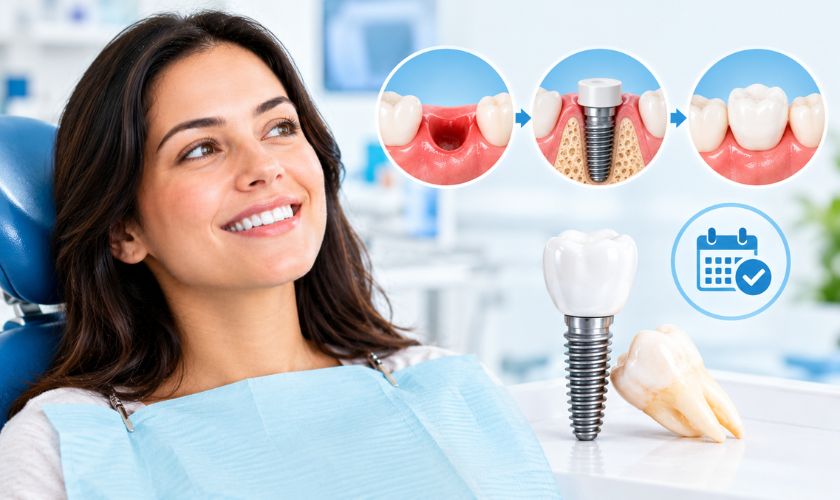
In some cases, an implant can be placed during the same appointment as a tooth extraction. This approach is called immediate implant placement. It allows the replacement post to be inserted directly into the empty tooth socket, potentially reducing the overall treatment timeline.
However, immediate placement is not suitable for everyone. It generally requires sufficient healthy jawbone, good surrounding gum tissue, and the absence of uncontrolled infection. The extracted tooth area must also provide enough support for the implant to remain stable.
A thorough examination and appropriate imaging help determine whether this option is safe and practical.
How Long Should You Wait After Tooth Extraction?
Depending on your oral health and healing progress, dental implant placement may happen at different stages.
1. Immediate Placement: Same Day
When the surrounding bone and gum tissue are healthy, an implant may be placed immediately after extraction. This approach can reduce the number of surgical appointments and help preserve the natural contours of the extraction site.
2. Early Placement: 4–8 Weeks
Some patients benefit from waiting approximately four to eight weeks. This allows the gum tissue to heal while preserving the opportunity for relatively early implant placement. It may be recommended when minor soft-tissue healing is needed.
3. Delayed Placement: 3–6 Months
Waiting three to six months may be appropriate when the extraction site needs more time to heal. This is particularly relevant when there was an infection, significant bone damage, or other complications.
4. Extended Healing: 6 Months or Longer
Patients with substantial bone loss may need additional procedures, such as bone grafting, before implant placement. The healing period depends on the extent of grafting and individual recovery.
Factors That Affect Dental Implant Timing
Not everyone follows the same treatment schedule. Several factors influence when an implant can be safely placed:
- Jawbone density: Adequate bone volume is essential for supporting and stabilizing an implant.
- Gum health: Healthy gum tissue helps create a suitable environment for healing.
- Existing infection: Active infections may require treatment before implant surgery.
- Smoking habits: Smoking can interfere with circulation and slow the healing process.
- Overall health: Certain medical conditions and medications may affect bone healing and recovery.
- Bone grafting needs: Additional bone support may require several months of healing before implant placement.
A personalized assessment helps establish a realistic treatment timeline.
Why You Should Avoid Waiting Too Long
After tooth extraction, the jawbone no longer receives stimulation from the missing tooth root. Over time, this can lead to bone resorption, meaning the jawbone gradually loses volume.
Leaving the space untreated may also allow neighboring teeth to shift, potentially affecting your bite and making future restoration more complicated.
Planning a dental implant in Granbury at an appropriate time can help restore chewing function, maintain dental alignment, and support your smile. Early consultation allows potential bone loss and other concerns to be evaluated before they become more complicated.
Choosing the Right Time for Dental Implants in Granbury, TX
The best time for implant placement is determined by your individual healing progress rather than a fixed number of weeks or months. A comprehensive dental examination, digital imaging, and evaluation of the extraction site can help identify the most suitable approach.
At Archstone Dental & Orthodontics, patients can explore tooth replacement options based on their oral health needs and treatment goals. Whether you recently had an extraction or have been living with a missing tooth, professional guidance can help you understand the next steps.
When you are ready to discuss your options, contact us to learn more about implant treatment and the evaluation process. You can also visit our dental office to discuss a personalized plan for restoring your smile in the Granbury area.
Frequently Asked Questions
1. Can I get a dental implant immediately after tooth extraction?
Yes, immediate placement may be possible if you have sufficient jawbone, healthy gum tissue, and no uncontrolled infection. An examination is necessary to determine whether this approach is appropriate.
2. How long should I wait after extraction before getting an implant?
Depending on healing and bone condition, implants may be placed immediately or after four weeks to six months. Your treatment timeline depends on individual oral health factors.
3. Does waiting too long after extraction affect dental implants?
Waiting too long can allow jawbone loss and neighboring teeth to shift. These changes may make implant placement more complicated and sometimes require additional procedures.
4. Is bone grafting always necessary before dental implant placement?
No, bone grafting is not always required. It may be recommended when the extraction site lacks sufficient bone volume or density to support a stable dental implant.
5. Can I get an implant if my extracted tooth had an infection?
Yes, implants may still be possible after an infected tooth is removed. However, the infection must be appropriately managed, and the site may need additional healing time.
6. How long does it take to heal after dental implant placement?
Initial gum healing generally takes a few weeks, while the implant may need three to six months to integrate with the jawbone before the final restoration is attached.
7. Are dental implants better than leaving an extraction space empty?
Dental implants replace missing tooth roots and help restore chewing function. They can also reduce bone loss in the treated area compared with leaving the space untreated.